The first weeks of a new team are a small social minefield. Everyone is deciding how much of themselves to bring to work, and the standard introductions round ("name, role, fun fact") asks people to make that decision in public, on the spot, with strangers watching. It is the highest-pressure version of the lowest-value question.
A shared map is a gentler way in. Instead of asking new colleagues to be interesting, it asks them where they have been, and lets the interesting part emerge on its own.
Why it suits new teams and new starters
- The disclosure is voluntary and granular. One person pins their whole life story; another pins three holidays. Both have fully taken part, and nobody can tell the difference from the outside.
- It gives quiet people a move that is not speaking. Dropping a pin is participation. For someone finding their feet in a new group, that is a much smaller step than talking to a full call.
- It creates immediate common ground. Two pins near each other is an instant, effortless conversation. Shared places are one of the fastest routes to "we have something in common", and a map surfaces them mechanically.
- Nobody needs an account. New starters may not have all their logins yet. Joining a session needs only the code and a browser, so it works on day one, on any device.
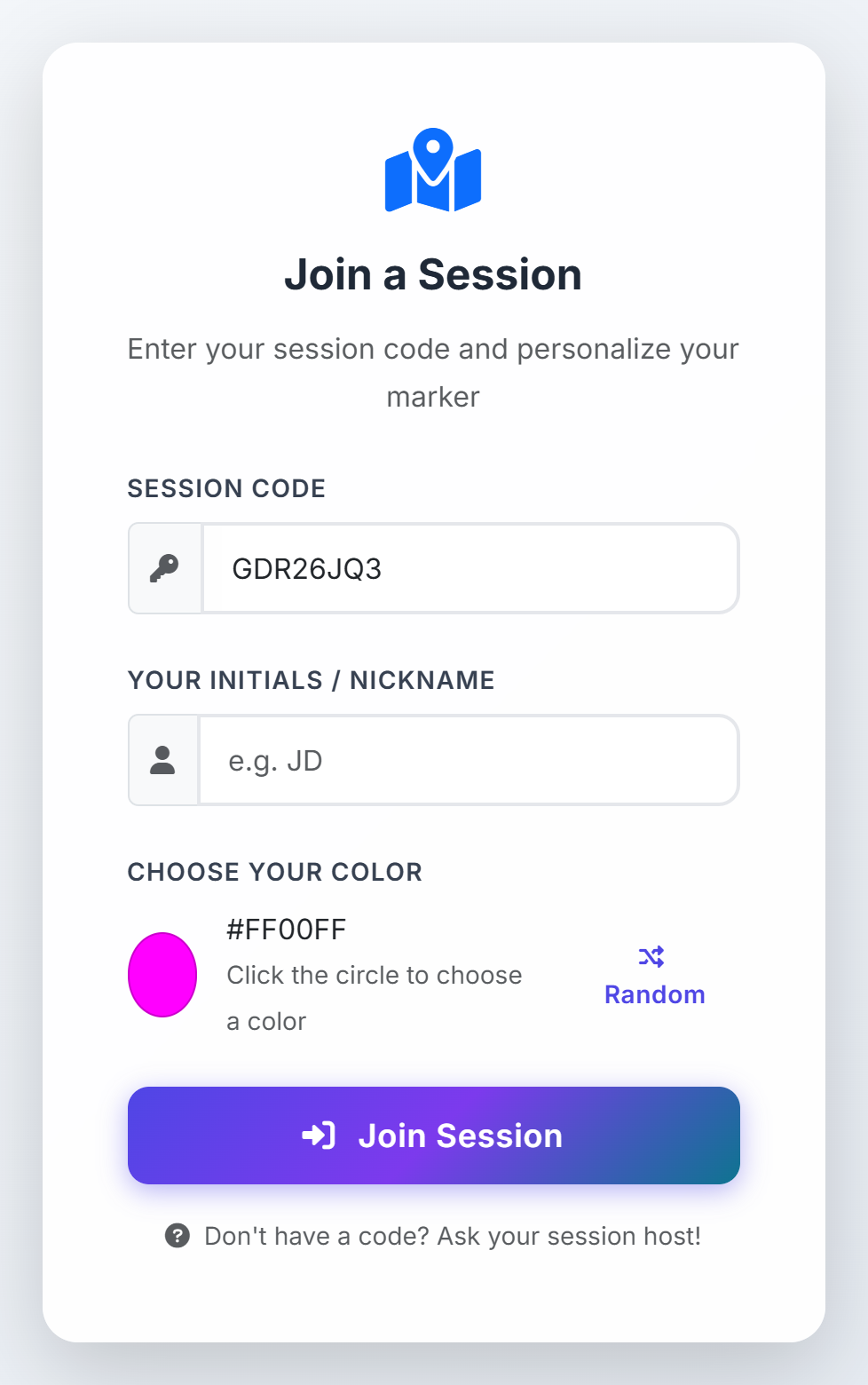
A simple onboarding format
- Before the call, the host creates a session and drops the code into the invite.
- First five minutes: everyone joins and pins two places: where you are based now, and one place that mattered to you. The map fills up while people are still arriving.
- Next ten minutes: walk the map together. Start with clusters ("apparently half of us have been to Lisbon"), then invite one story per person, always with an easy opt-out.
- Finish with the group's country count and a question: which of these places should the team hear more about some other time? You now have material for the next three check-ins.
Prompts that work better than "fun fact"
- Pin the place you grew up, or the place that feels most like home.
- Pin somewhere you would go back to tomorrow.
- Pin the most unexpected place your life has taken you.
- Pin somewhere you have never been but are quietly determined to get to.
The last one matters more than it looks: it lets people who have not travelled much take part on exactly equal terms. The map is about the stories, not a competition about stamps in a passport, and a good host says so out loud.
Making it recur
One session at kick-off is good. A map that comes back is better: re-open it when someone new joins, and let them add their pins to the team's existing picture. Joining an established map is a surprisingly warm way to arrive, because the team's history is visibly already there, with a gap where the new person's pins go.
Break the ice without the cringe
One code, one map, and a first meeting people actually remember.
Host a session How it works